As an independent restaurant owner, efficiency is everything. When it comes to online ordering, the siren song of using your Point-of-Sale (POS) system’s integrated platform is strong: it’s “all-in-one,” and often “included.”
But this seemingly simple choice carries a massive hidden cost: lost sales and smaller basket sizes.
The truth is, your POS system was built for staff speed, not customer conversion. Asking it to run your online sales channel is asking it to do something it was never designed for, and it’s costing you money every single day.
Here is why your online menu needs to be structured around the customer experience, and why separating your online platform is the smart strategy for maximizing profit.
1. The POS Menu vs. The Customer Brain
Your POS system’s menu architecture is built for the professional: the server, the bartender, the cashier. They prioritize speed, shortcuts, and streamlined item identification.
For a customer ordering takeout, this structure is often confusing and inefficient:
- POS Focus: Speed and minimizing keystrokes for staff.
- Customer Focus: Exploration, clarity, and guided choices.
When a customer encounters a rigid, non-intuitive menu structure designed for the back office, they get frustrated, they abandon their cart, or they simply choose the simplest item without adding valuable extras. This suboptimal experience is why many POS-based ordering systems have notoriously low conversion rates.
2. The Power of Upselling: Structuring for a Bigger Basket
The primary goal of your online ordering platform should be to increase your Average Basket Size (ABS). A customer-centric platform achieves this by making upsells and add-ons effortless.
The Modifier Mistake
A POS menu typically dumps all choices onto the customer at once. Want a burger? Here are 15 cheese types, 10 sauces, and 8 side options all listed together. This is overwhelming and leads to option paralysis.
The Smart Solution: Conditional Modifiers
A dedicated platform like Dine Local uses conditional menu modifiers and dependencies. This allows you to:
- Guide the Customer: Only show the “Dipping Sauce Choice” when the customer adds fries to their basket.
- Maximize Upgrades: Seamlessly prompt for a drink pairing or a dessert after the main course is selected.
- Offer Better Options: Structure items not just by size, but by an upgrade path (e.g., Small Fries -> Upgrade to Poutine for $5).
This intelligent structuring is why platforms focused on conversion see dramatically better results. Dine Local clients experience a 33% higher basket size than the industry average online ordering platform because the menu is built for buying, not ringing up.
3. The Seamless Fulfillment Trap: Why Two Links Equals Lost Orders
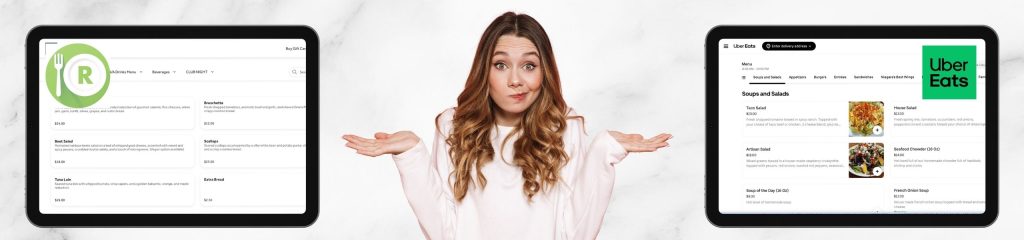
Most POS-based online ordering systems are designed only for pickup and require purchasing costly add-on modules or third-party integrations to handle delivery. This forces restaurant owners to make a damaging operational choice:
- The Customer Experience Disaster: Putting two separate links on your website, one for POS pickup orders and another for a third-party delivery service (which carries high commissions and poor customer data). This confuses customers and increases drop-off.
- The Operational Nightmare: Having to manage two distinct order flows, two different sets of accounting data, and two separate customer interfaces.
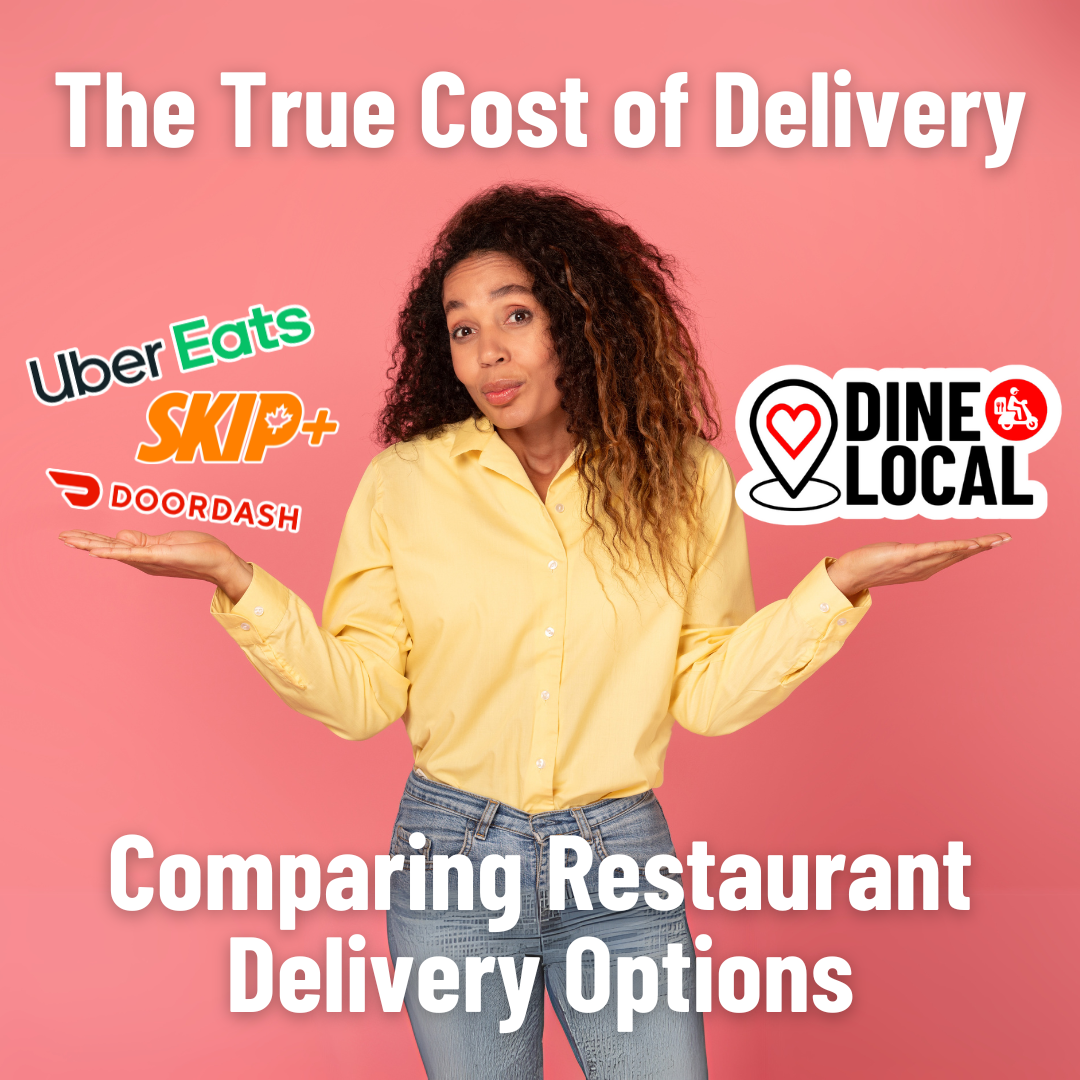
By contrast, Dine Local is built for total fulfillment flexibility. You get a single, unified interface that effortlessly offers the customer both pickup and delivery options from the very first click right through to the point of conversion, completely integrated into one system without any additional fees or complexity. This single link minimizes customer friction and maximizes conversions.
4. Flexibility and Focus: Why Separate Rules Work Best
Your restaurant’s in-house rules are naturally more flexible. A server can quickly ask the kitchen to accommodate a special request or substitute an item. You don’t want that same level of “anything goes” complexity for self-service online ordering.
By running your online menu separately from your POS menu, you gain ultimate control:
- Online Simplicity: You can enforce stricter, clearer ordering rules (e.g., no substitutions on discounted items, specific cut-off times for certain dishes).
- In-House Agility: Your servers retain the flexibility to manage exceptions and provide personalized service.
Trying to force your POS to manage two distinct sets of rules inevitably leads to frustrating tradeoffs that harm either the customer experience or your internal operations.
5. The Integration Myth: Conversion Trumps Automation (Usually)
The key argument for POS-integrated ordering is “automation.” But for most independent restaurants, the volume of first-party takeout and delivery orders does not justify the compromises required by rigid integration.
The True Cost of Compromised Integration:
- Compromise: You accept a sub-optimal customer experience, leading to low conversion rates (500%+ lower than Dine Local’s average). This pushes customers to call in, which takes significantly more time away from your service staff.
- Forced Efficiency: Achieving complex, real-time POS integration is extremely expensive. The cheaper alternative often involves pushing “temporary items” into your POS, which destroys the integrity of your Kitchen Display System (KDS), inventory tracking, and accounting systems.
The Better Way
Unless you run an extremely high-volume ghost kitchen where every second of BOH automation is critical, it is significantly more efficient to prioritize the customer experience and manually translate the order into your POS.
A dedicated platform like Dine Local can generate a crisp, clear printed receipt or ticket that can flow through your BOH with your other chits. Alternatively, your staff simply enters the order into the POS, a task that takes seconds, while enjoying the benefits of a system that drives significantly higher sales volume and basket sizes because it was built from the ground up to convert.
The Choice: Compromise or Convert?
When choosing your online ordering system, you face a strategic choice:
- Choose Convenience (POS): Accept a compromised, low-converting, low-basket-size experience that alienates customers but satisfies an outdated notion of “simplicity.”
- Choose Conversion (Dine Local): Use a dedicated platform built for the customer to maximize your sales and profitability, and manage the minimal operational steps needed to efficiently fulfill the order.
Stop paying the hidden cost of “free” POS ordering. Invest in a dedicated, customer-centric platform and watch your takeout and delivery revenue grow. Contact us or book a demo today to learn more about Dine Local and how we can help your Ontario restaurant!